WordPress/2022
VATC – Trung Tâm Huấn Luyện Kỹ Thuật Ô Tô Việt Nam
A WordPress training website delivered in one month through direct 1:1 client collaboration, with flexible ACF content management and responsive frontend development.
Live production website delivered during my work at Dona Media. Source code and internal project files are private and are not publicly available.
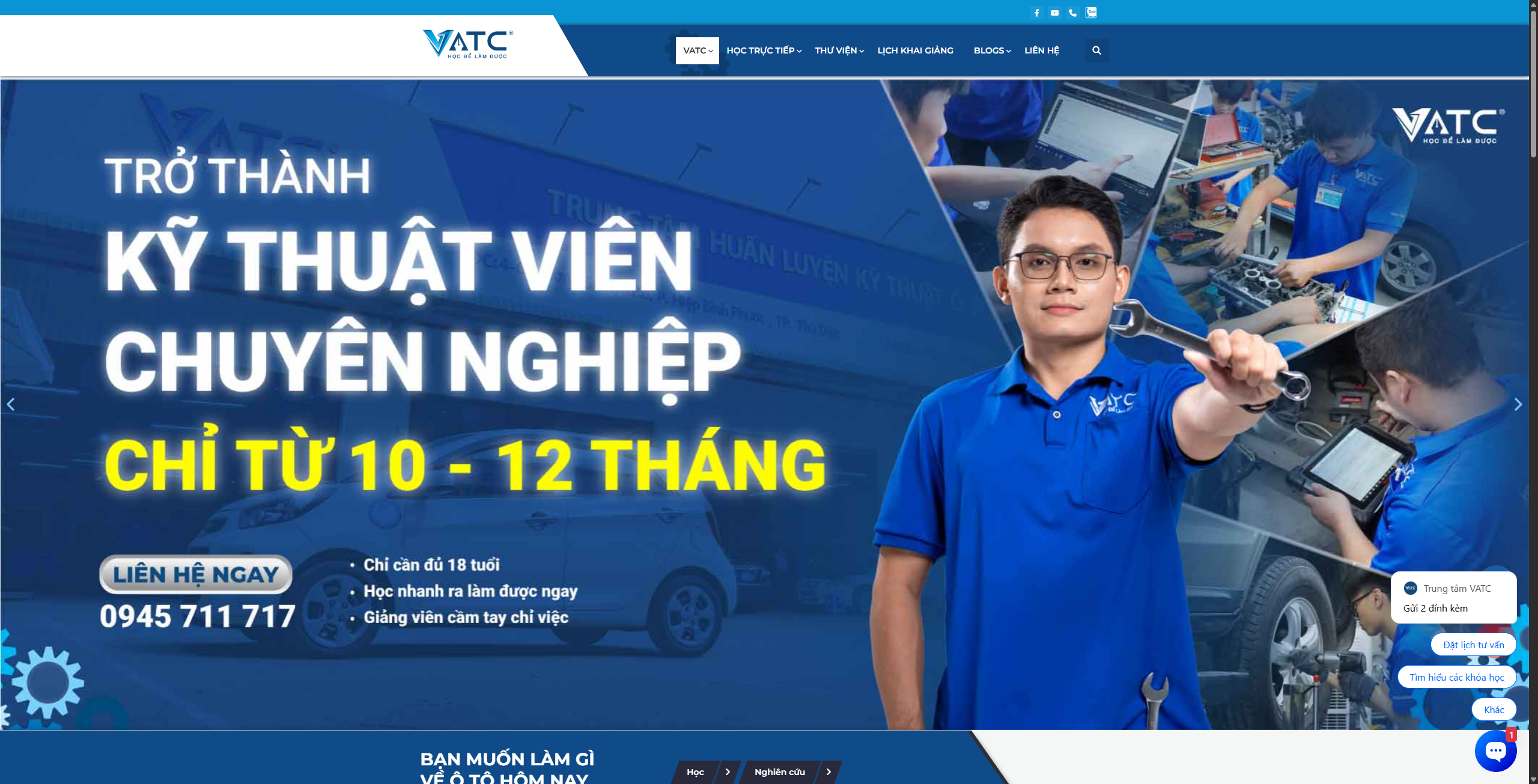
Context
Overview
VATC – Vietnam Automotive Training Center is a content-rich website for an automotive technical training organization. The platform presents training programs for different learner groups while also supporting expert profiles, educational resources, news, enrollment information and consultation content.
The project was delivered within one month, with me working as the solo developer and communicating directly with the client throughout the implementation process. Instead of following a long hand-off process, development and revision happened in short 1:1 feedback cycles, allowing requirements and presentation details to be adjusted continuously during the build.
My work focused on WordPress implementation, flexible ACF-driven content management and responsive frontend development. The objective was to turn a large amount of course and institutional information into reusable page structures that could be maintained more easily from the WordPress administration area.
The project required balancing delivery speed with maintainability. The website needed to be completed quickly while still providing reusable content structures and a consistent experience across desktop, tablet and mobile devices.
The problem
VATC needed to present a large amount of training information through a website that remained clear for prospective students and manageable for internal content editors.
The platform includes multiple automotive training programs targeting different audiences, from complete beginners to technicians looking to improve specialized skills. Course information can contain different durations, schedules, learner profiles and supporting content, making a rigid page structure difficult to maintain.
The website also needed to accommodate institutional information, expert profiles, educational articles, student feedback and enrollment-related content without making the overall experience feel fragmented.
A major project constraint was time. The implementation needed to be completed within one month while the requirements and presentation continued to evolve through direct client feedback.
This meant the development process had to support rapid revisions without turning every requested change into duplicated or hard-coded frontend work.
The solution
I approached the project by building reusable WordPress sections and structured editing fields rather than hard-coding each piece of content directly into individual pages.
ACF was used to expose business-focused content fields inside WordPress, allowing information to be updated through clearly defined controls while the presentation remained handled by the theme.
Reusable frontend components were developed for repeated patterns such as course information, content cards, expert profiles, calls to action and supporting information. This helped maintain consistency while allowing sections to be revised quickly during the client feedback process.
The responsive frontend was implemented using HTML, CSS and JavaScript, with layouts adjusted for desktop, tablet and mobile rather than relying on a single fixed desktop composition.
Because I worked directly with the client, revisions could be evaluated and implemented immediately. This shortened the feedback loop and made it possible to refine both content presentation and functionality during the same one-month delivery period.
Ownership, made explicit
My contribution
I worked as the sole developer responsible for translating client requirements and feedback into a working WordPress website within a one-month delivery period.
- Developed and customized the WordPress frontend based on client requirements.
- Worked directly with the client through 1:1 review and revision sessions throughout the project.
- Converted feedback into frontend and content-management changes during active development.
- Built flexible content sections using Advanced Custom Fields.
- Created reusable WordPress template components for repeated content patterns.
- Developed responsive layouts using HTML, CSS and JavaScript.
- Structured complex training information into clearer and more manageable page sections.
- Implemented reusable layouts for presenting courses and supporting educational content.
- Adjusted typography, spacing, images and responsive behavior based on direct client feedback.
- Handled frontend testing and refinements across desktop, tablet and mobile devices.
- Integrated and configured required WordPress functionality and plugins.
- Resolved layout and compatibility issues discovered during development and client review.
- Prepared the website for content management through the WordPress administration area.
- Delivered the project through rapid iterative development rather than a long sequential hand-off workflow.
Key features
Structured Course Content
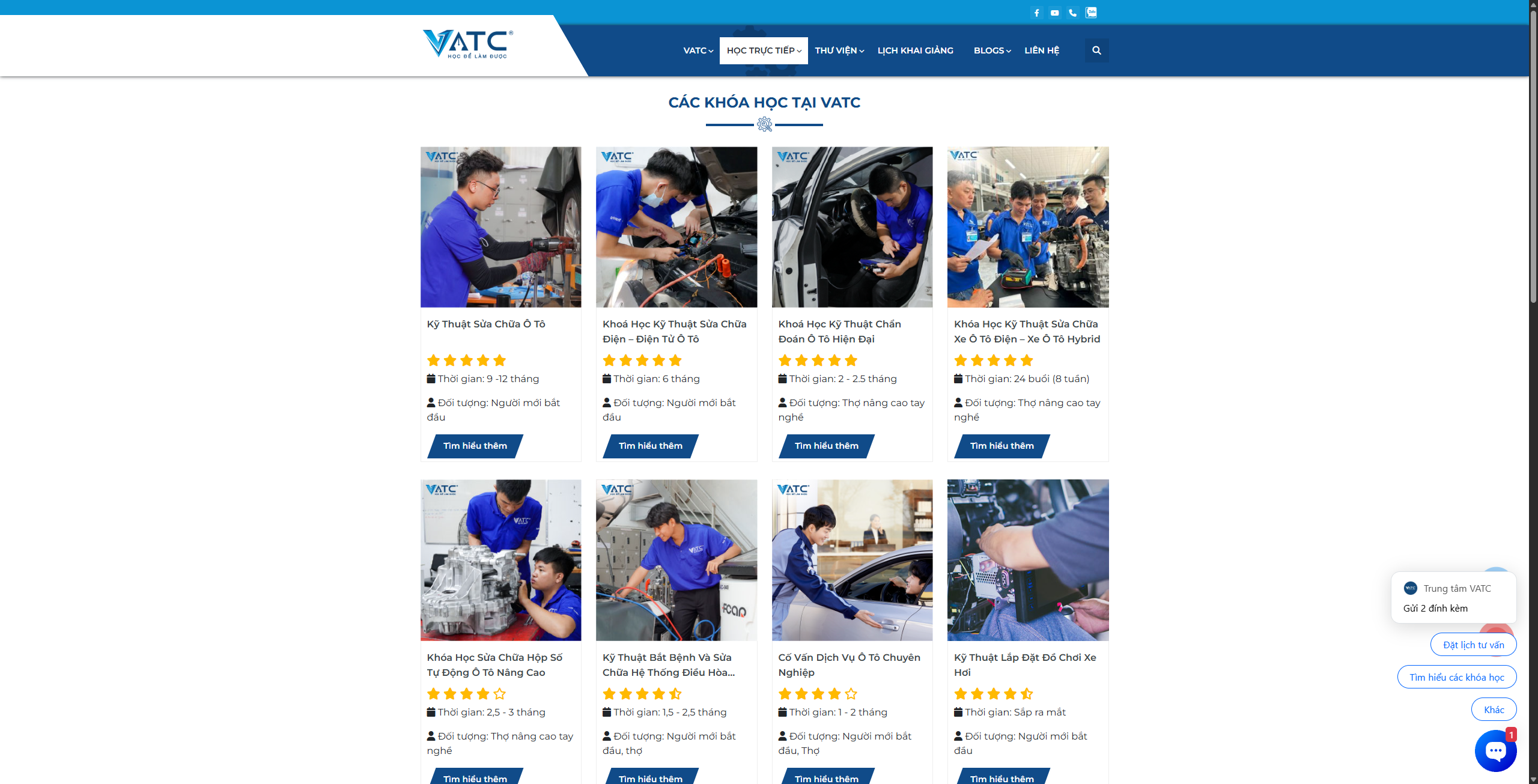
Training information is presented through repeatable structures so different courses can maintain consistent hierarchy while still supporting different schedules, durations and learner requirements.
Flexible ACF Content Management
Editable website content is organized through structured ACF fields, allowing the client to manage important information from WordPress without changing frontend template code.
Course Discovery
Training programs are organized so visitors can quickly identify courses relevant to their current experience level and technical goals.
Detailed Course Pages
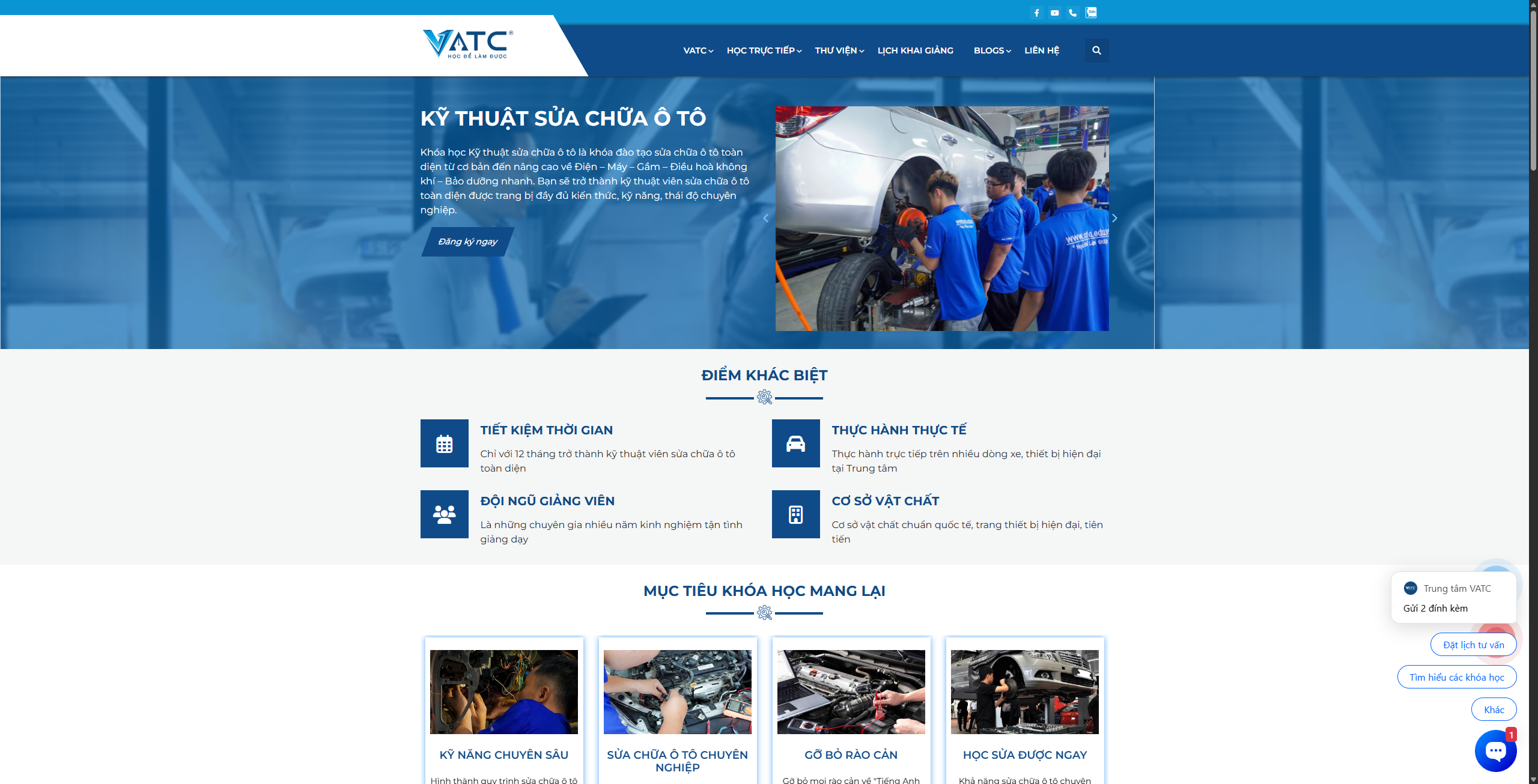
Individual course pages provide space for training objectives, schedules, duration, pricing, learning outcomes and conversion-focused enrollment information.
Expert & Instructor Profiles
Reusable profile presentation allows VATC to introduce instructors and automotive specialists with roles and professional background in a consistent format.
Training Schedule Information
Course intake information can be presented clearly with opening dates, class identifiers, schedules and enrollment availability to support prospective students during decision-making.
Automotive Knowledge Content
The website supports long-form educational and technical content, allowing the organization to publish automotive knowledge, documentation, career information and institutional updates alongside its training programs.
Consultation & Enrollment CTA
Conversion-oriented sections provide clear paths for prospective students to request consultation and continue from course research toward direct contact with VATC.
Responsive Training Experience
Course cards, long-form content, profile information and calls to action were adapted for different screen sizes to keep information readable and usable across desktop, tablet and mobile devices.
Challenges & trade-offs
Delivering within one month
The main constraint was the short delivery window. The website contained multiple types of content and responsive layouts, but development, review and revisions all needed to happen within approximately one month.
Working directly with the client
I worked 1:1 with the client throughout implementation. Requirements were not treated as a single fixed specification; visual and content decisions continued to evolve as sections were reviewed. I therefore needed to implement changes quickly while avoiding short-term fixes that would make later revisions difficult.
Balancing iteration speed and maintainability
Rapid feedback can easily lead to duplicated CSS, one-off layouts and hard-coded content. Reusable components and structured ACF fields helped keep frequently revised content separate from template presentation.
Handling a large content hierarchy
The website needs to communicate courses, instructors, institutional information and educational resources to visitors with different objectives. The challenge was organizing that information without making pages difficult to scan.
Supporting different course structures
Not every training program contains identical information. Some target beginners, others experienced technicians, and course schedules and durations vary significantly. Reusable layouts therefore needed enough flexibility to support different content without losing visual consistency.
Responsive behavior under frequent revisions
Changes requested for desktop layouts could introduce problems at tablet and mobile breakpoints. Each major revision therefore required checking its effect across multiple viewport sizes rather than treating responsive work as a final step.
Turning client feedback into implementation decisions
Direct client communication reduced the feedback loop but also required translating non-technical feedback into practical UI and WordPress decisions. Part of my role was identifying whether a request should be solved through content structure, layout styling or reusable functionality rather than simply reproducing the requested visual change.
Results & impact
The project was delivered within the planned one-month development period through continuous 1:1 collaboration with the client.
- Delivered a production WordPress website while working as the sole developer.
- Completed development and client-driven revisions within a one-month project timeline.
- Established reusable content structures for training and institutional information.
- Reduced reliance on hard-coded content by moving editable information into structured WordPress fields.
- Created reusable frontend components that made revisions faster and more consistent.
- Improved the ability to present multiple training programs through a unified visual system.
- Provided a responsive experience across desktop, tablet and mobile devices.
- Enabled the client to manage core website content through the WordPress administration area.
- Demonstrated an efficient direct client-to-developer workflow with short feedback and implementation cycles.
Screenshots
Technology stack
Build flexible WordPress content with custom fields, repeaters, relationships, and structured admin fields.
DocumentationCreate responsive layouts, animations, and custom UI components for WordPress websites.
DocumentationCreate structured WordPress content types for projects, locations, courses, and other reusable data.
DocumentationManage hosting, domains, files, databases, and website deployments in DirectAdmin environments.
DocumentationBuild semantic, responsive, and maintainable markup for WordPress themes and templates.
DocumentationImplement frontend interactions such as menus, sliders, filters, galleries, popups, forms, and UI effects.
DocumentationDevelop WordPress themes, templates, hooks, queries, and custom backend functionality.
DocumentationCreate modern touch-enabled sliders and carousels with responsive layouts and mobile-friendly interactions.
DocumentationOrganize and classify structured WordPress content using custom categories, terms, and reusable content relationships.
DocumentationImprove WordPress loading speed through asset optimization, image handling, caching, code cleanup, and frontend performance improvements.
DocumentationBuild and customize websites with custom themes, ACF, Custom Post Types, Taxonomies, plugins, and WordPress APIs.
Documentation