WordPress/2026
Gopeaks Coach
A data-driven WordPress platform for endurance coaching, performance education and athlete-focused tools, built around flexible content management and responsive user experiences.
Live production website. Source code and internal project documentation are private company assets and are not publicly available.
Context
Overview
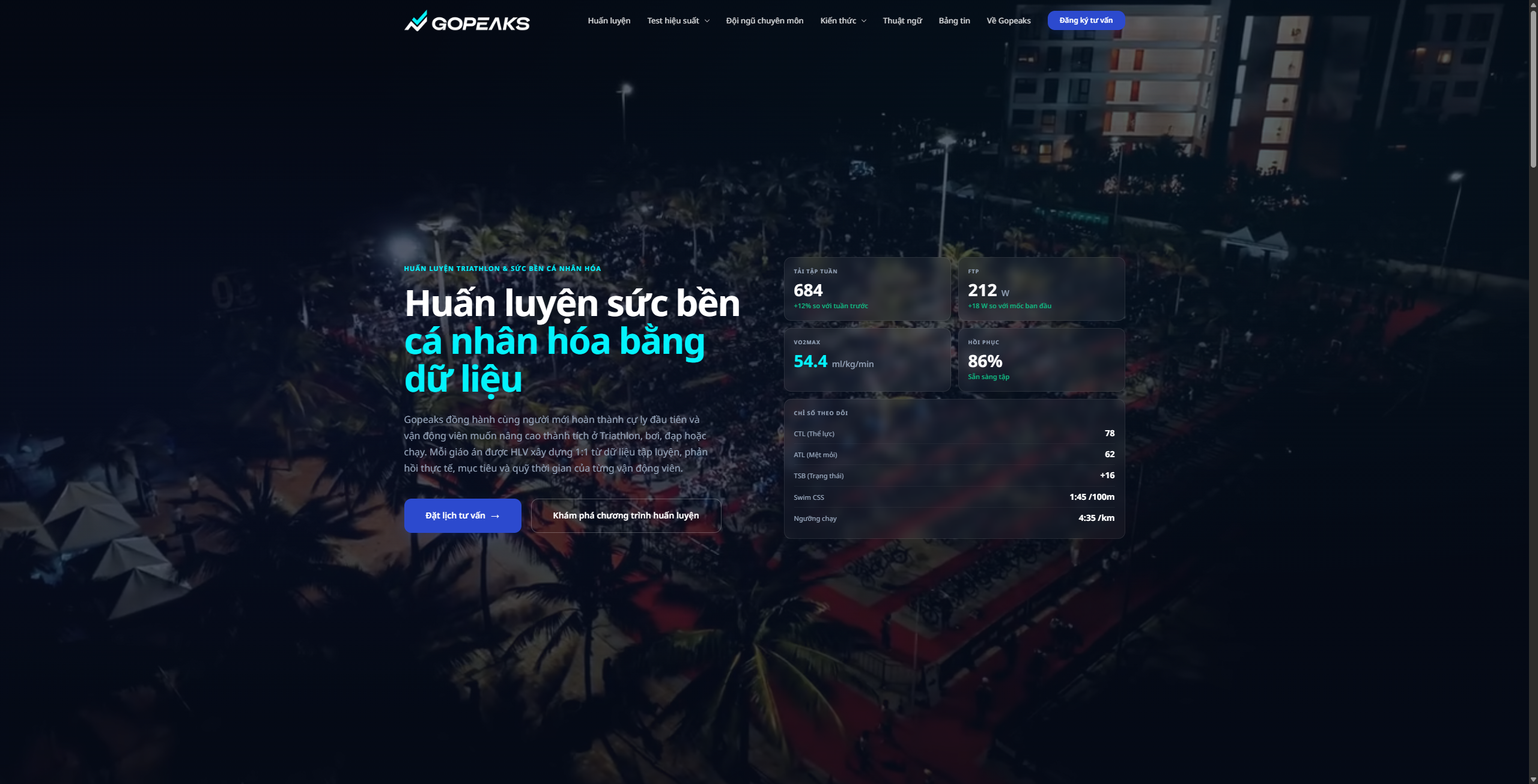
Gopeaks Coach is the public web platform of Gopeaks, a training and coaching company focused on endurance and multisport athletes. The website communicates personalized coaching services, performance testing, training methodology, educational content and athlete-focused tools through a structured WordPress experience.
My role focused on translating business and content requirements into maintainable WordPress solutions. I worked on dynamic content architecture, reusable frontend components, responsive layouts and ongoing technical improvements using ACF, Custom Post Types, Taxonomies, PHP, HTML, CSS and JavaScript.
A key objective was to make the website flexible for internal teams. Instead of hard-coding content directly into templates, important sections were structured so administrators could update services, team information, performance content and other website data through WordPress.
The project also involved improving content structure, SEO readiness, frontend performance and compatibility across themes, plugins and hosting environments as the website continued to evolve.
The problem
Gopeaks needed more than a static marketing website. The platform had to communicate several different areas of the business – coaching services, coaches, performance testing, educational content, athlete tools and supporting information — while remaining manageable as the amount of content continued to grow.
Hard-coded page sections would make regular updates dependent on development work and create inconsistency between pages. Different types of information also required different content structures, making a single generic page editor insufficient.
The frontend needed to remain consistent across desktop, tablet and mobile while supporting content-heavy pages, images, interactive tools and third-party WordPress plugins.
Another challenge was SEO. Much of the website content was structured through ACF rather than the standard WordPress editor, so the content architecture needed to remain semantic and compatible with SEO workflows such as Rank Math.
The solution
I approached the project as a reusable WordPress content system rather than a collection of individually hard-coded pages.
ACF was used to create structured editing interfaces for content that needed to be managed frequently. Custom Post Types and Taxonomies were used where content benefited from having its own reusable structure, while reusable theme components reduced duplicated markup between pages.
On the frontend, I developed and customized responsive layouts using HTML, CSS and JavaScript, with particular attention to readability, navigation and consistent behavior across screen sizes.
The website structure was also refined to support SEO and future expansion. Headings, metadata, image alternative text and page content were organized so that new pages and tools could be introduced without rebuilding the overall website architecture.
This approach allowed the website to evolve continuously while keeping both frontend presentation and WordPress administration maintainable.
Ownership, made explicit
My contribution
My responsibility covered both WordPress implementation and frontend development, with a strong focus on making the website easier to maintain and extend.
- Developed and customized WordPress theme templates based on business and content requirements.
- Designed dynamic content structures using Advanced Custom Fields.
- Implemented Custom Post Types and Taxonomies for content that required reusable structures.
- Developed responsive interfaces using HTML, CSS and JavaScript.
- Converted static or repeated page content into manageable WordPress fields.
- Built reusable components so common interface patterns could be maintained consistently across the website.
- Integrated and configured WordPress plugins for forms, SEO, content management and supporting functionality.
- Worked on Rank Math configuration, metadata, keyword targeting, image alt text and content structure.
- Developed and integrated performance-related tools and calculator pages into the website.
- Improved page structure and navigation so users could reach important information more easily.
- Optimized frontend behavior and page performance where possible.
- Troubleshot compatibility issues involving WordPress themes, plugins and hosting environments.
- Worked with internal teams, including Customer Service and Operations, to gather requirements and implement website improvements.
- Supported ongoing website updates, testing and deployment as the platform continued to evolve.
Key features
Flexible Content Management
Key website sections are managed through structured ACF fields instead of hard-coded template content. This allows internal teams to update information while keeping the frontend layout consistent.
Structured WordPress Content
Custom Post Types, Taxonomies and reusable WordPress structures organize content that needs its own lifecycle, template or classification. This provides a more maintainable foundation than storing everything inside individual pages.
Responsive Interface
Layouts and interface components are designed to adapt across desktop, tablet and mobile devices. Navigation, typography, spacing, media and interactive elements are adjusted for smaller screens rather than simply scaling down the desktop layout.
Athlete Performance Tools
Performance-focused calculators and supporting content are integrated into the website so athletes can access practical tools alongside coaching information and educational resources.
Performance Testing
Dedicated content structures present performance testing information in a clearer format, helping visitors understand available tests, their purpose and the next step for accessing GoPeaks services.
SEO-ready Content Structure
Page titles, heading hierarchy, metadata, image alternative text and content structure are organized with search visibility in mind. Rank Math is used alongside WordPress content to support ongoing SEO optimization.
Reusable Theme Components
Frequently used interface patterns are implemented as reusable template components, reducing duplicated frontend code and helping new pages maintain the same visual system.
Admin-friendly Workflow
The backend experience is structured around business content rather than raw HTML, allowing routine content updates to be completed from WordPress without modifying theme files.
Challenges & trade-offs
Balancing flexibility with consistency
Providing administrators with more editing freedom can easily lead to inconsistent layouts. I addressed this by defining structured ACF fields and reusable components rather than allowing every section to be edited as unrestricted HTML.
Managing different content types
The website includes company information, coaching services, team profiles, performance testing content and interactive tools. Each type has different requirements, so the challenge was deciding what should remain page-specific and what should become reusable structured content.
ACF and SEO workflows
A significant amount of content is stored in ACF rather than the default WordPress editor. This creates additional considerations for SEO plugins and content analysis. I therefore paid particular attention to semantic templates, metadata, heading hierarchy and Rank Math configuration.
Plugin compatibility
WordPress projects often depend on multiple plugins maintained independently. Changes to plugins, themes or hosting environments can introduce unexpected conflicts, so compatibility testing and troubleshooting became part of the ongoing development process.
Responsive content-heavy layouts
Pages containing large images, cards, tools and long-form content need more than a desktop layout scaled down to mobile. Components were adjusted individually to preserve readability and usability across different screen sizes.
Performance versus functionality
New functionality and richer content can increase page weight. The project therefore required ongoing attention to asset loading, frontend code, image usage and unnecessary dependencies as the website expanded.
Results & impact
The project resulted in a more structured and maintainable WordPress platform that can support a growing range of coaching services, educational content and athlete-focused functionality.
- Created a clearer content structure that makes important information easier for visitors to access and navigate.
- Reduced dependence on hard-coded template content by moving editable information into structured WordPress fields.
- Established reusable patterns that make new pages and sections easier to implement consistently.
- Improved the editing experience for administrators by organizing content around meaningful fields rather than raw markup.
- Created a stronger technical foundation for performance tools, testing content and future website functionality.
- Improved consistency across desktop, tablet and mobile layouts.
- Provided a more SEO-ready content structure for ongoing optimization with Rank Math.
- Made ongoing maintenance and troubleshooting easier by keeping content, presentation and reusable structures more clearly separated.
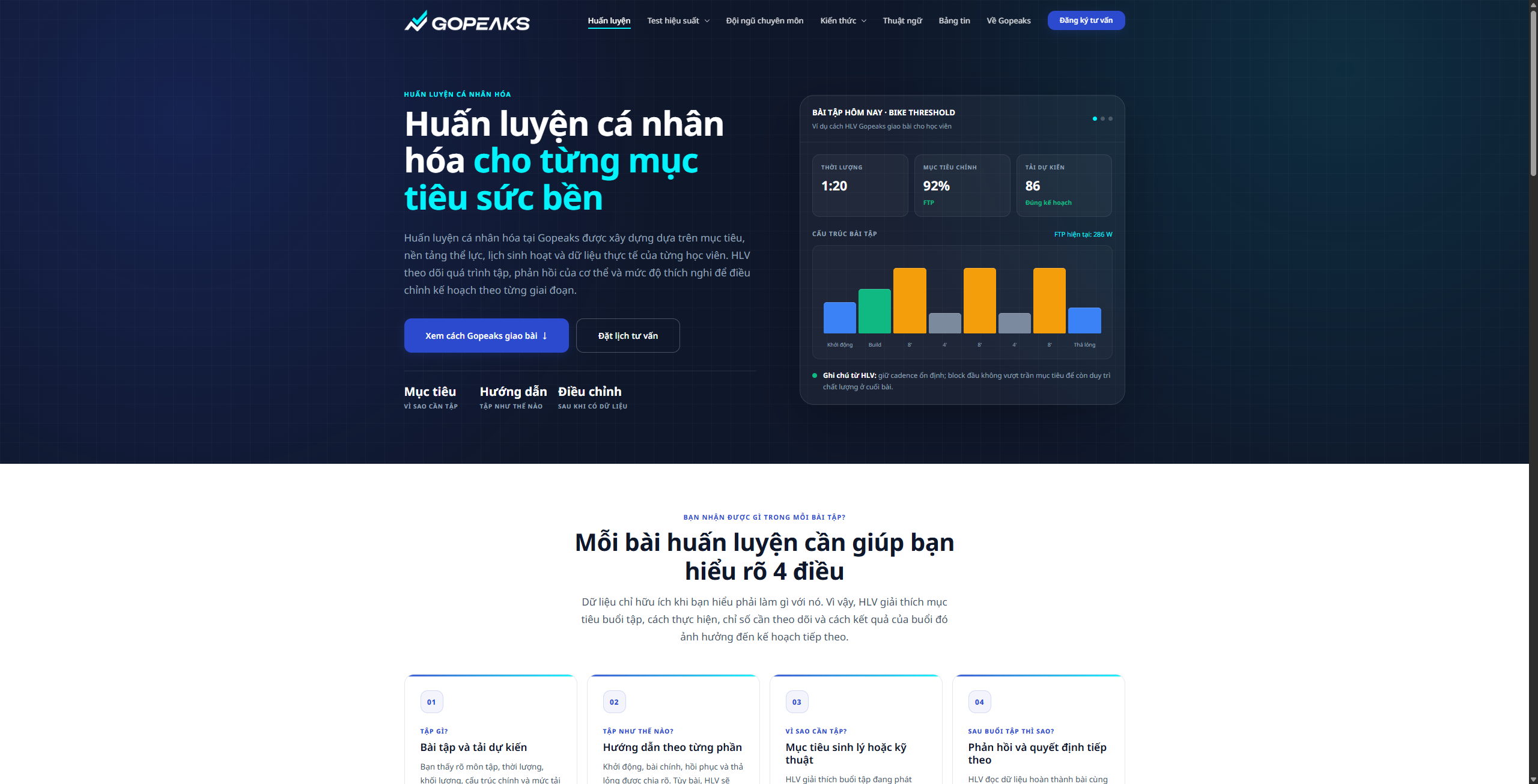
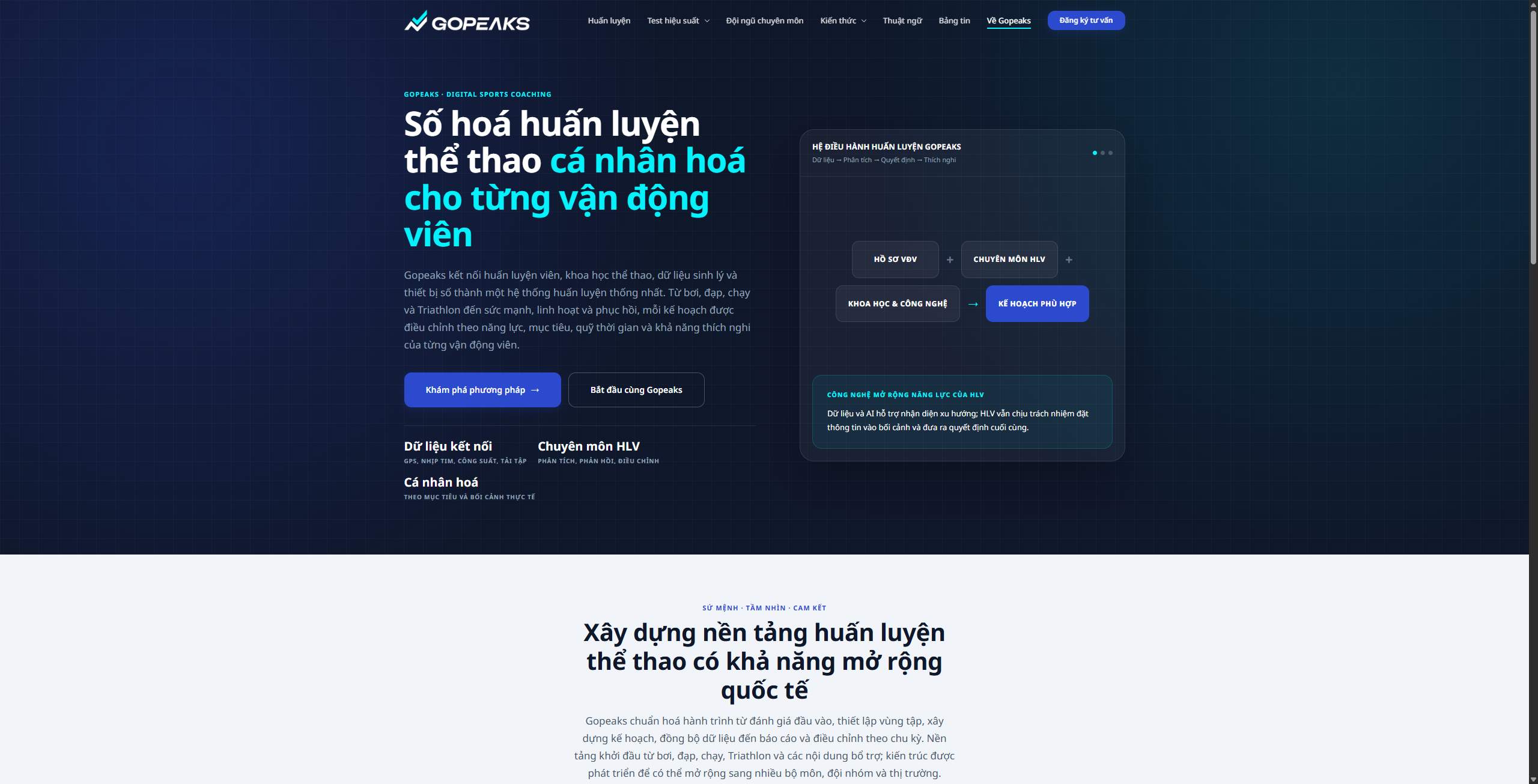
Screenshots
Technology stack
Build flexible WordPress content with custom fields, repeaters, relationships, and structured admin fields.
DocumentationOptimize WordPress content with meta titles, descriptions, headings, image alt text, content structure, and Rank Math.
DocumentationCreate responsive layouts, animations, and custom UI components for WordPress websites.
DocumentationCreate structured WordPress content types for projects, locations, courses, and other reusable data.
DocumentationBuild semantic, responsive, and maintainable markup for WordPress themes and templates.
DocumentationImplement frontend interactions such as menus, sliders, filters, galleries, popups, forms, and UI effects.
DocumentationDevelop WordPress themes, templates, hooks, queries, and custom backend functionality.
DocumentationOrganize and classify structured WordPress content using custom categories, terms, and reusable content relationships.
DocumentationImprove WordPress loading speed through asset optimization, image handling, caching, code cleanup, and frontend performance improvements.
DocumentationBuild and customize websites with custom themes, ACF, Custom Post Types, Taxonomies, plugins, and WordPress APIs.
Documentation